Rheumatology
Lupus vs Rheumatoid Arthritis vs Fibromyalgia: Know the Difference

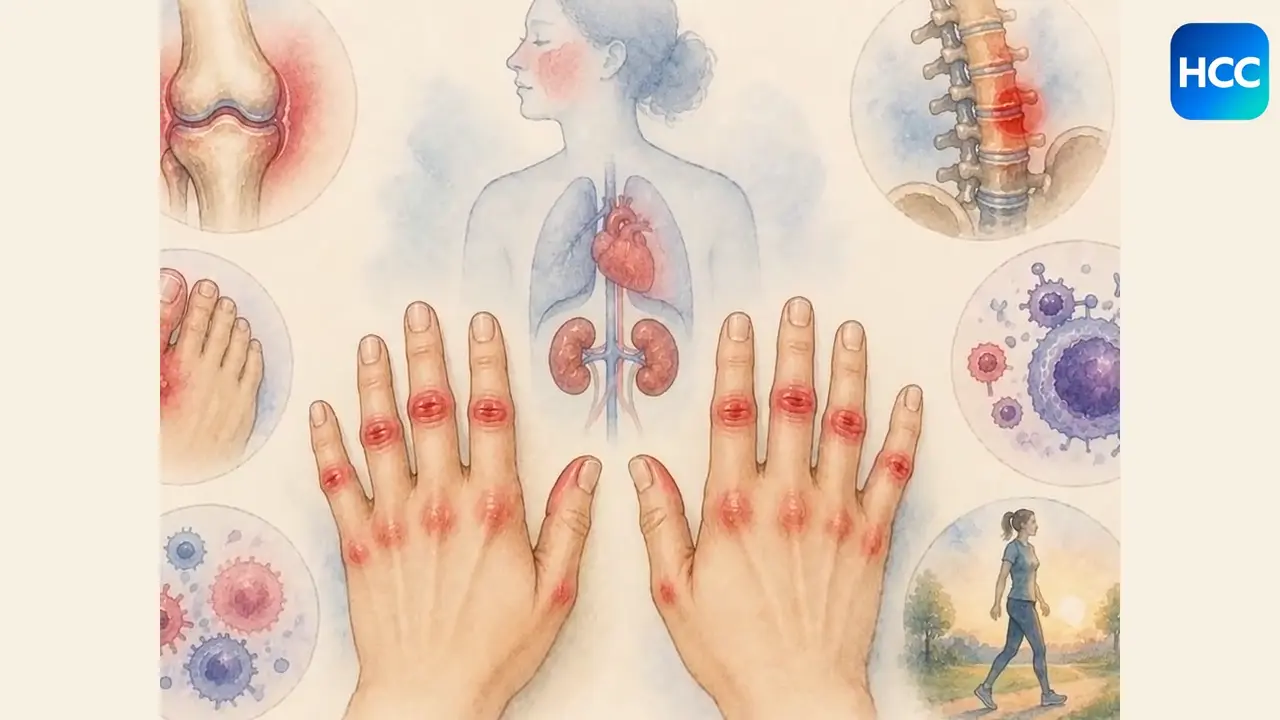
Persistent joint pain, constant fatigue and body aches share three common suspects: lupus, rheumatoid arthritis (RA) and fibromyalgia. They look similar from the outside but have very different causes and treatments — which is why getting the right diagnosis matters.
Prefer to watch?
See our short visual summary of lupus, rheumatoid arthritis, and fibromyalgia.
What is lupus?
Lupus (Systemic Lupus Erythematosus, or SLE) is a long-term autoimmune disease in which the immune system attacks healthy tissue and causes inflammation across the body — skin, joints, kidneys, heart, lungs, brain and blood cells.
Common symptoms include joint pain and swelling, extreme fatigue, a butterfly-shaped facial rash, sun sensitivity, mouth ulcers, hair thinning, unexplained fever, chest pain on deep breathing and kidney problems.
What is rheumatoid arthritis (RA)?
RA is also autoimmune, but it primarily targets the lining of the joints, especially the small joints of the hands, wrists and feet, and it often affects joints symmetrically (the same joints on both sides).1
Typical symptoms include morning stiffness lasting more than 30 minutes, swollen and warm joints, reduced range of motion, fatigue and — in advanced disease — joint deformity.
What is fibromyalgia?
Fibromyalgia is a chronic pain disorder, not an autoimmune disease. It changes how the brain and nervous system process pain signals, so the body becomes more sensitive to it.
Symptoms include widespread muscle pain, generalised body aches, non-restorative sleep, brain fog, headaches, increased sensitivity to touch, and often anxiety or low mood. Unlike lupus or RA, fibromyalgia does not cause inflammation or permanent joint damage.
Quick comparison
| Feature | Lupus | Rheumatoid Arthritis | Fibromyalgia |
|---|---|---|---|
| Disease type | Autoimmune | Autoimmune | Chronic pain disorder |
| Main target | Multiple organs + joints | Joints | Muscles & nervous system |
| Joint swelling | Common | Very common | Usually absent |
| Organ involvement | Yes | Occasional | No |
| Inflammation | Yes | Yes | No |
| Permanent joint damage | Possible | Common if untreated | No |
How each is diagnosed
- Lupus: ANA test, anti-dsDNA antibodies, complement levels, full blood count, urine tests and inflammatory markers, interpreted alongside symptoms.
- Rheumatoid arthritis: rheumatoid factor (RF), anti-CCP antibodies, ESR and CRP — anti-CCP is far more specific for RA than RF, and normal or negative results do not exclude the diagnosis,1 often with X-ray, ultrasound or MRI to look at joint damage.2
- Fibromyalgia: a clinical diagnosis based on widespread pain lasting at least 3 months and other criteria; tests are mostly used to rule out other conditions.
Treatment approaches
- Lupus — antimalarial therapy, corticosteroids for flares, immunosuppressants and, in some cases, biologic therapy.
- RA — disease-modifying anti-rheumatic drugs (DMARDs), biologics, and joint-protection strategies.3
- Fibromyalgia — a mix of graded exercise, sleep and stress management, cognitive behavioural therapy, and certain medications for pain and sleep.
When to see a rheumatologist in Dubai
Joint pain that lasts more than six weeks, morning stiffness longer than 30 minutes, unexplained fatigue with joint symptoms, or a family history of autoimmune disease all deserve an expert opinion. Early diagnosis can stop long-term damage, and a rheumatology consultation in Dubai is the usual starting point.
Clinical references
Sources consulted while preparing this article. Links open the original guideline or publication.
- 1.Diagnosis and Management of Rheumatoid Arthritis: A ReviewJAMA · 2018 · doi:10.1001/jama.2018.13103↑ back to text
- 2.EULAR recommendations for the use of imaging of the joints in the clinical management of rheumatoid arthritisAnnals of the Rheumatic Diseases · 2013 · doi:10.1136/annrheumdis-2012-203158↑ back to text
- 3.2021 American College of Rheumatology Guideline for the Treatment of Rheumatoid ArthritisArthritis Care & Research · 2021 · doi:10.1002/acr.24596↑ back to text
Find our health articles useful? Add Health Call Clinic as a Preferred Source on Google.
Have a question about this topic?
Our clinicians are happy to answer general educational questions related to this article.
We can't provide a diagnosis, recommend treatment, or comment on an individual medical case without a proper clinical assessment. If your question concerns your own symptoms, diagnosis, medications, test results, or treatment, please book an appointment so we can help you properly.
Please don't send medical records or sensitive personal health information through this educational Q&A.
Talk to an expert at Health Call Clinic
In-clinic rheumatology, psychiatry and counseling, plus DHA-approved online psychiatry consultations at Dubai Healthcare City.