Rheumatology
Psoriatic Arthritis in Children: When Joint Pain Gets Blamed on a Fall
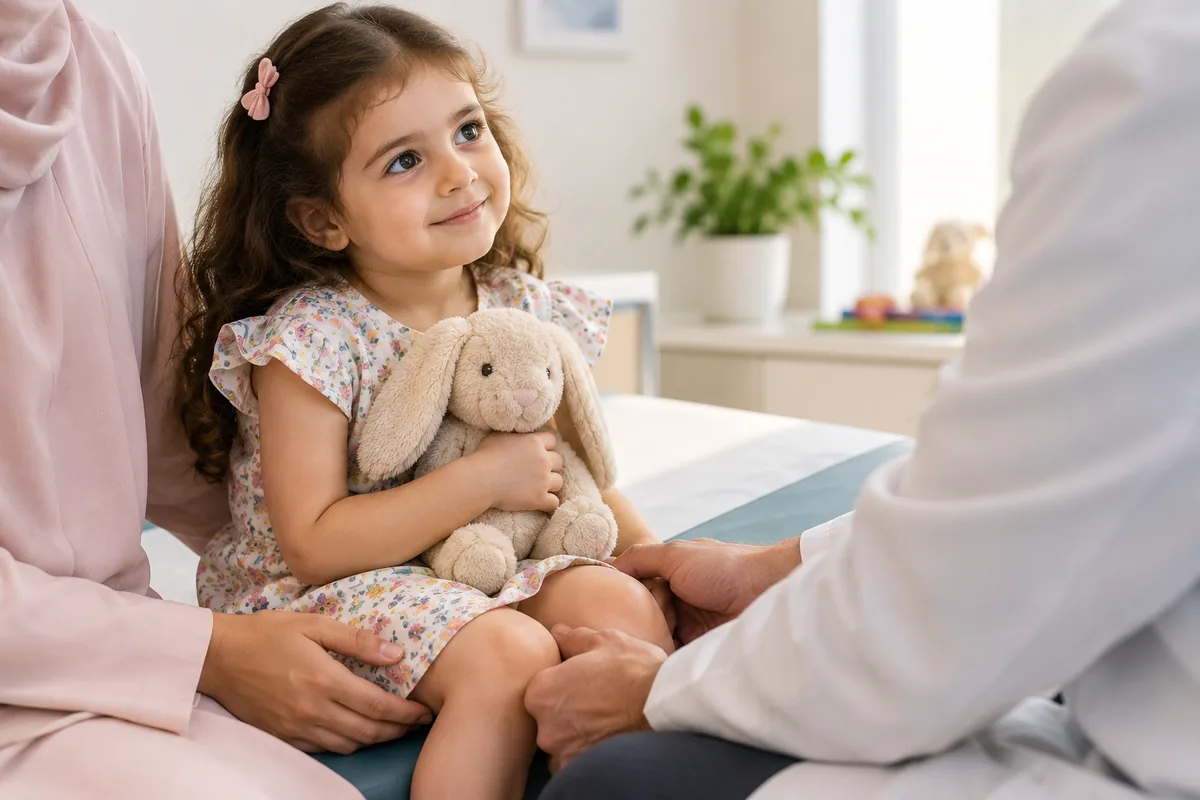
Children fall.
They run, climb, jump, and often come home with bruises that disappear almost as quickly as they appear.
Because of this, it is perfectly natural for parents to assume that a swollen knee or a limp is simply the result of another playground accident.
Most of the time they are right. Occasionally, however, there is another explanation.
Patient story disclaimer: This article describes the experience of a real child and her family. They kindly gave permission for their story to be shared here. All identifying details — including names, dates, and specific circumstances — have been removed or altered to protect privacy.
A Story That Began with a Limp
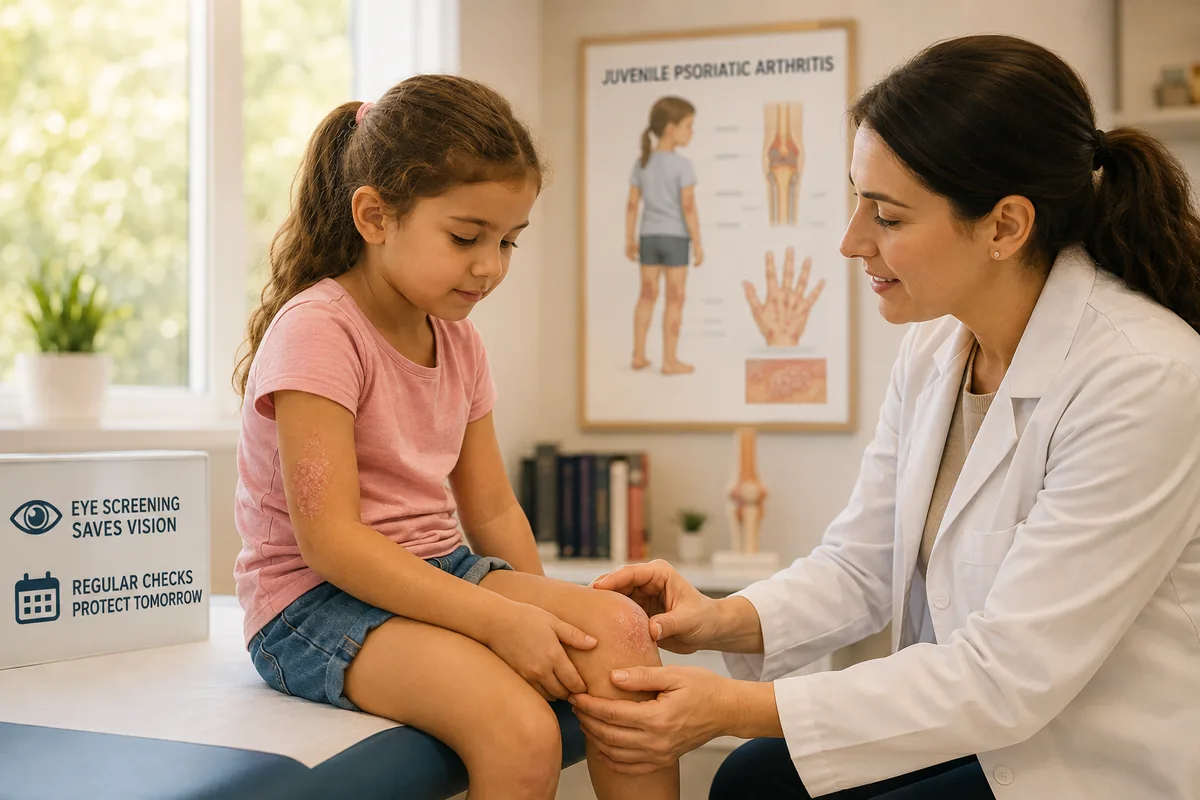
She was four years old when her parents first brought her to clinic. For almost a year she had intermittent limping and swelling of one knee. She also had mild psoriasis, but only a few small patches. Eventually it became clear that the skin and joint symptoms were part of the same disease.
The sections that follow are general medical information and are not derived from this family's case.
What Is Juvenile Psoriatic Arthritis?
Juvenile psoriatic arthritis sits within the juvenile idiopathic arthritis classifications. It describes arthritis occurring with psoriasis, or with related clinical features such as nail changes, dactylitis or a first-degree family history of psoriasis.1 Either the skin disease or the arthritis may appear first, which sometimes delays recognition.
A single swollen knee together with mild psoriasis does not by itself establish the diagnosis. Assessment involves the pattern and duration of joint symptoms, examination, exclusion of other causes such as infection or injury, and appropriate investigations. For the adult form of the condition, see our page on psoriatic arthritis treatment in Dubai.
The Complication Many Parents Never Expect
Some children with juvenile idiopathic arthritis are at risk of uveitis, which may cause few or no noticeable symptoms. Regular ophthalmic screening is therefore recommended, with frequency based on the child's individual risk factors.2 Because inflammation may be asymptomatic, screening is how it is detected early enough to treat before complications develop.
How Treatment Is Decided
Treatment is individualised according to the pattern of joint involvement, disease activity, response to previous therapy, any associated uveitis, and safety considerations. Options may include NSAIDs, intra-articular joint injections, conventional DMARDs, biologic therapies, and physical or occupational therapy.1
In this child's case, treatment moved from conventional therapy to a biologic and later to a targeted oral therapy as her disease pattern became clearer. Moving between treatment classes is a normal part of individualised care; it does not in itself represent either failure or success.
Every Child Follows Their Own Journey
Some children respond quickly, while others require adjustments over time. The goal is always long-term control with the safest effective treatment.
Today
She is now ten years old, her joints remain well controlled, her eyes are monitored regularly, and she enjoys the ordinary activities of childhood.
A Final Thought
Most swollen knees in children are caused by ordinary bumps and falls. Occasionally, persistent swelling is the body's way of asking for a closer look. Timely assessment and appropriate disease control are important for reducing the risk of joint complications, while risk-based ophthalmic screening helps detect uveitis before complications develop.1,2
What Parents Should Remember
- A child does not need many swollen joints for juvenile arthritis to be considered.
- Mild psoriasis can still be an important clue.
- Eye screening is an essential part of care.
- Treatment plans often evolve over time.
Frequently Asked Questions
Can young children develop psoriatic arthritis?
Yes, even before school age.
Does psoriasis always appear first?
No. Either condition may appear first.
Why are eye examinations important?
Because uveitis may be asymptomatic, screening at intervals based on the child's risk factors is how it is picked up early enough to treat.2
Is it normal for treatment to change?
Yes. Therapy is individualised.
Can children do well long term?
Many children can achieve good disease control with treatment, but the course and treatment needs vary between children.1
Book a Consultation
To discuss your child's joint symptoms with our rheumatology team, call +971 4 363 5343 or WhatsApp +971 52 197 1179. You can also book an appointment online.
Clinical references
Sources consulted while preparing this article. Links open the original guideline or publication.
- 1.2019 American College of Rheumatology/Arthritis Foundation Guideline for the Treatment of Juvenile Idiopathic Arthritis: Therapeutic Approaches for Non-Systemic Polyarthritis, Sacroiliitis, and EnthesitisArthritis & Rheumatology · 2019 · doi:10.1002/art.40884↑ back to text
- 2.2019 American College of Rheumatology/Arthritis Foundation Guideline for the Screening, Monitoring, and Treatment of Juvenile Idiopathic Arthritis-Associated UveitisArthritis Care & Research · 2019 · doi:10.1002/acr.23871↑ back to text
Find our health articles useful? Add Health Call Clinic as a Preferred Source on Google.
Have a question about this topic?
Our clinicians are happy to answer general educational questions related to this article.
We can't provide a diagnosis, recommend treatment, or comment on an individual medical case without a proper clinical assessment. If your question concerns your own symptoms, diagnosis, medications, test results, or treatment, please book an appointment so we can help you properly.
Please don't send medical records or sensitive personal health information through this educational Q&A.
Talk to an expert at Health Call Clinic
In-clinic rheumatology, psychiatry and counseling, plus DHA-approved online psychiatry consultations at Dubai Healthcare City.