Practice Philosophy
Why We Practice Medicine This Way

Reflections on Trust, Understanding, and the Human Side of Healthcare
One afternoon, after we had discussed several treatment options, a patient smiled and said, "Thank you. I understand my condition much better now."
It was a simple comment. But it reminded me of something that many healthcare professionals come to appreciate over the course of their careers.
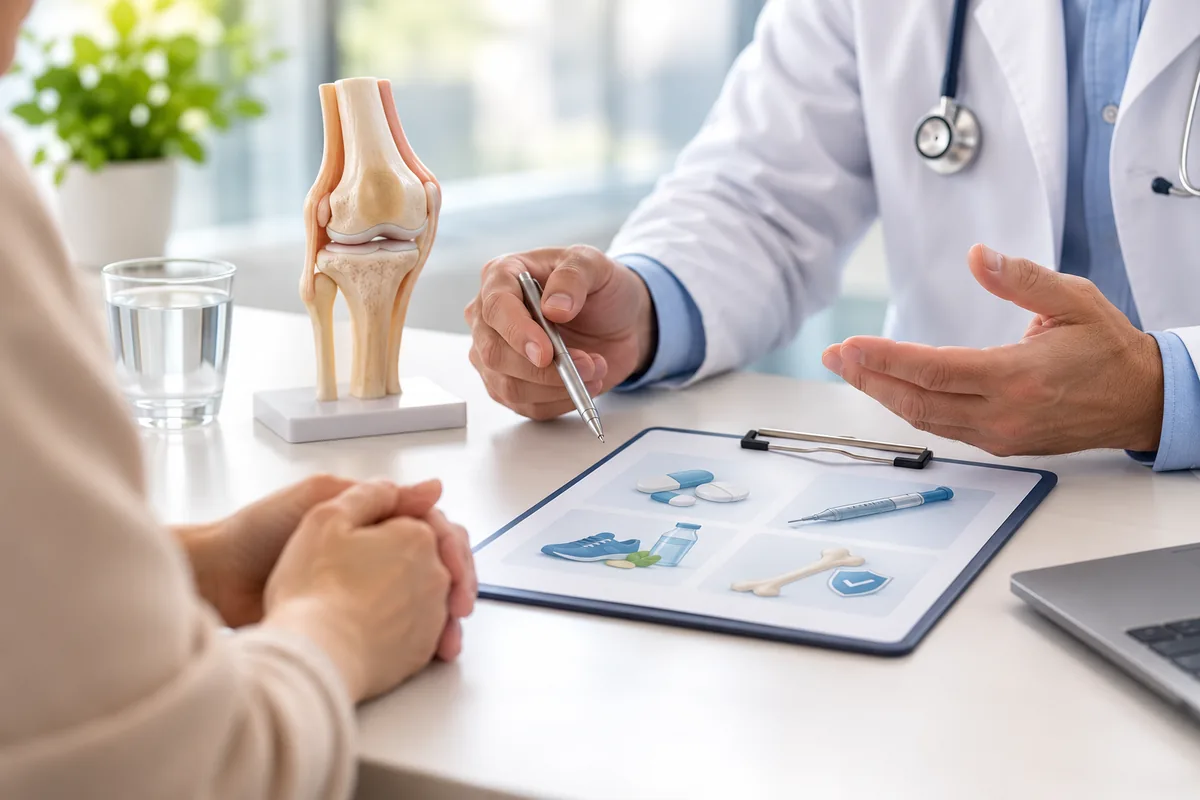
A medical consultation is about more than reaching a diagnosis or prescribing a treatment. It is also about helping people understand what is happening, why certain recommendations are being made, and what those recommendations may mean for their lives.
Knowledge cannot remove every uncertainty. But understanding often makes uncertainty easier to live with.
Medicine Begins with Science
Modern medicine is built upon scientific research. Every day, doctors rely on evidence gathered from carefully conducted studies involving thousands of patients around the world. This evidence has transformed healthcare and continues to improve the lives of millions of people.
Science provides the foundation of good medicine. Without it, healthcare would become inconsistent, unpredictable, and unreliable. Yet science is only the beginning.
Every Patient Brings a Different Story
No two patients are exactly alike. Even when two people share the same diagnosis, they may have different medical histories, different priorities, different family circumstances, and different goals.
One person may value the most aggressive treatment possible. Another may place greater importance on avoiding side effects. Neither approach is right or wrong. Good medical care recognises that evidence must always be applied to the individual rather than to a diagnosis alone.
Good Medicine Is a Conversation
The best consultations are rarely one-sided. Patients bring their experiences, symptoms, concerns, priorities, and questions. Healthcare professionals bring scientific knowledge, clinical experience, and professional judgement.
Together, these perspectives help shape decisions that are appropriate for the individual rather than simply following a standard pathway. Questions are not interruptions to good medical care — they are part of it.
Understanding Is Part of Treatment
Receiving a diagnosis can be overwhelming. People often leave a consultation remembering only a small part of what was discussed. Taking time to explain a condition, the reasons behind different treatment options, and the expected benefits and risks helps patients become active participants in their own care.
Understanding does not eliminate uncertainty. But it often replaces fear with confidence.
Medicine Is Not Always Black and White
One of the most important lessons in medicine is that certainty is not always possible. Sometimes several diagnoses remain possible. Sometimes more than one treatment is appropriate. Sometimes the best decision becomes clearer only with time.
Acknowledging uncertainty is not a weakness. It is a natural part of practising thoughtful, evidence-based medicine.
Learning Never Stops
Medical knowledge evolves continuously. New research changes the way diseases are diagnosed and treated. Recommendations that were considered best practice years ago may be replaced as better evidence becomes available.
Good healthcare depends on remaining curious, continuing to learn, and being willing to adapt when new evidence emerges. Medicine is not static. Neither should those who practise it.
Beyond the Consultation
Access to reliable medical information has never been more important. People often search for answers long before they see a doctor and continue searching after they leave the clinic.
Accurate health education helps people ask better questions, recognise reliable information, and participate more confidently in decisions about their care. Whether someone is reading to understand their own condition or simply to learn more about health, trustworthy information benefits everyone.
A Final Thought
Every healthcare professional hopes to improve lives. Sometimes that happens through a diagnosis. Sometimes through a treatment. Sometimes through reassurance. And sometimes through helping someone understand their condition a little better than they did before.
At its heart, medicine is not only about treating disease. It is about caring for people. And perhaps one of the most important ways we care for people is by helping them understand the journey they are on.
Find our health articles useful? Add Health Call Clinic as a Preferred Source on Google.
Have a question about this topic?
Our clinicians are happy to answer general educational questions related to this article.
We can't provide a diagnosis, recommend treatment, or comment on an individual medical case without a proper clinical assessment. If your question concerns your own symptoms, diagnosis, medications, test results, or treatment, please book an appointment so we can help you properly.
Please don't send medical records or sensitive personal health information through this educational Q&A.
Talk to an expert at Health Call Clinic
In-clinic rheumatology, psychiatry and counseling, plus DHA-approved online psychiatry consultations at Dubai Healthcare City.