Psychiatry
Eating Disorders: When Food Becomes More Than Food
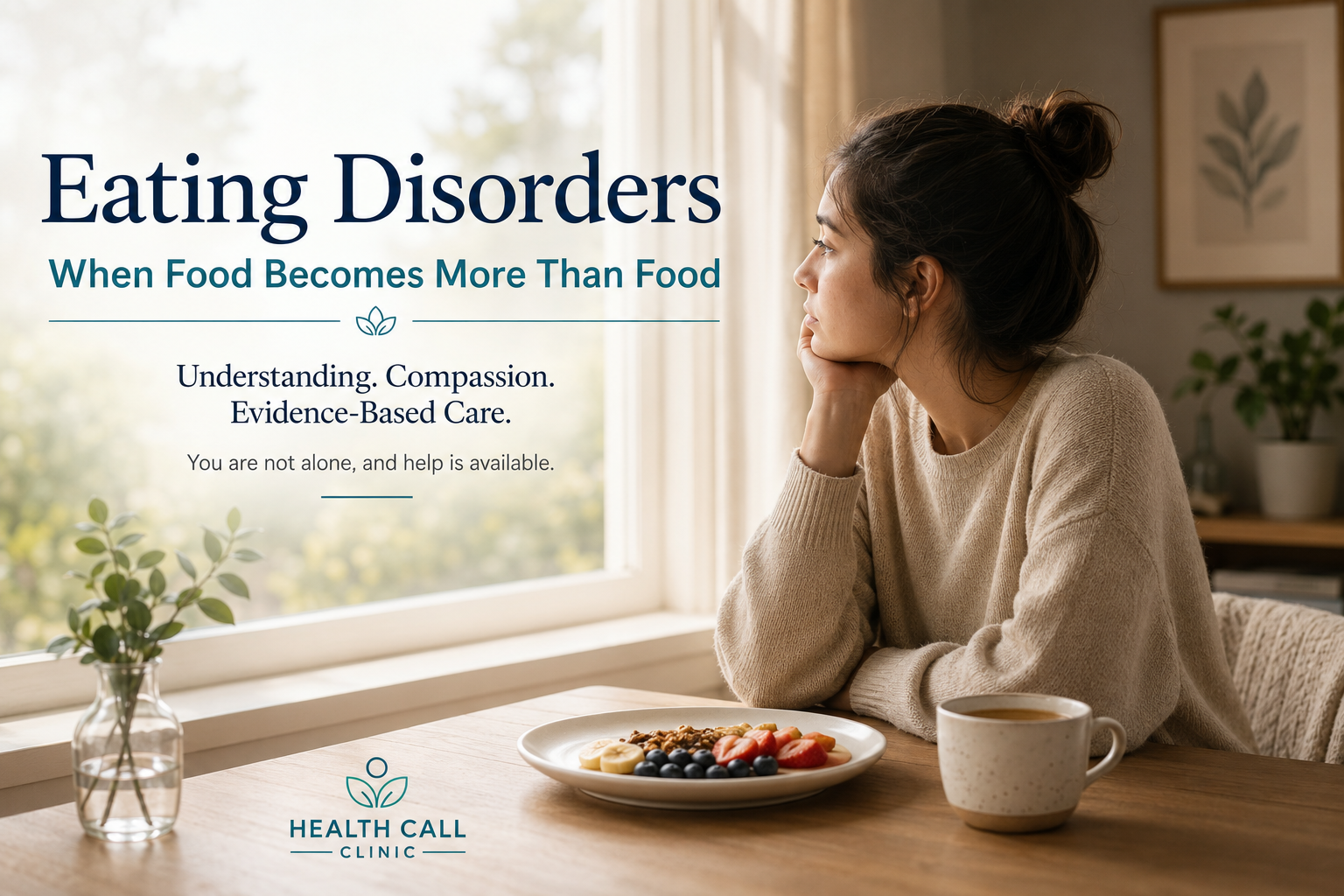
Understanding eating disorders with compassion, not judgment
Eating disorders are serious mental health conditions involving disturbances in eating behaviours and related thoughts and emotions. They can affect physical health as well as psychological and social functioning, and some presentations can become medically life-threatening.1,2
Common eating disorders include anorexia nervosa, bulimia nervosa and binge-eating disorder. Each has distinct diagnostic features, and people whose symptoms do not fit neatly into one category may still have a clinically significant eating disorder requiring assessment.
Different forms of eating disorders
Anorexia nervosa involves persistent restriction of food intake leading to significantly low body weight, together with an intense fear of gaining weight or behaviours that interfere with weight restoration.
Bulimia nervosa involves recurrent episodes of binge eating with loss of control, followed by compensatory behaviours such as self-induced vomiting, fasting, misuse of laxatives or excessive exercise.
Binge-eating disorder involves recurrent episodes of eating unusually large amounts of food with a sense of loss of control and marked distress, without the regular compensatory behaviours seen in bulimia nervosa.1
Not everyone fits neatly into a single diagnosis, and individualised assessment is essential.
Signs and symptoms
- Changes in eating habits
- Avoiding meals with others
- Excessive concern about weight or body shape
- Eating in secret
- Rapid weight changes
- Mood changes, anxiety, or social withdrawal
Body weight alone cannot determine whether someone has an eating disorder. NICE advises considering the broader pattern of restrictive eating, bingeing, purging, rapid weight change, physical symptoms, psychological distress and impairment rather than relying on a single measure.2
Treatment
Treatment depends on the specific eating disorder, age, physical risk, psychological needs and individual circumstances. It may include an eating-disorder-focused psychological therapy, nutritional rehabilitation or guidance, physical-health monitoring and coordinated support from different professionals.2
Eating disorders can cause serious medical complications. Rapid weight loss, fainting, dehydration, severe weakness, chest symptoms, marked changes in heart rate, repeated vomiting, self-harm or an inability to remain safe require prompt medical assessment rather than waiting for a routine therapy appointment.2
The goal is not simply changing food intake. Treatment supports physical recovery while helping the person address the thoughts, emotions and behaviours maintaining the eating disorder.
Frequently asked questions
Can adults develop eating disorders?
Yes. They can affect people of any age.
Can men develop eating disorders?
Yes. Eating disorders affect both men and women.
Can eating disorders be treated?
Yes. Effective treatments are available, and early recognition and appropriate care are important. Treatment should be matched to the specific eating disorder and the person's physical and psychological needs.1,2
A final thought
An eating disorder is rarely about food alone. It is often a reflection of emotional struggles that deserve understanding rather than judgment.
Because true recovery begins not with a meal — but with compassion.
- Book an appointment with Dr. Indira at Dubai Healthcare City.
Clinical references
Sources consulted while preparing this article. Links open the original guideline or publication.
- 1.Eating DisordersNational Institute of Mental Health↑ back to text
- 2.Eating disorders: recognition and treatment (NG69)National Institute for Health and Care Excellence (NICE) · 2017↑ back to text
Find our health articles useful? Add Health Call Clinic as a Preferred Source on Google.
Have a question about this topic?
Our clinicians are happy to answer general educational questions related to this article.
We can't provide a diagnosis, recommend treatment, or comment on an individual medical case without a proper clinical assessment. If your question concerns your own symptoms, diagnosis, medications, test results, or treatment, please book an appointment so we can help you properly.
Please don't send medical records or sensitive personal health information through this educational Q&A.
Talk to an expert at Health Call Clinic
In-clinic rheumatology, psychiatry and counseling, plus DHA-approved online psychiatry consultations at Dubai Healthcare City.