Rheumatology
Gout: Symptoms, Causes, Treatment & Prevention of Future Attacks
In this short video, Dr. Bassel Darwish, Consultant Rheumatologist at Health Call Clinic in Dubai Healthcare City, explains what gout is, why an attack can settle completely and still come back, and what treatment actually involves.
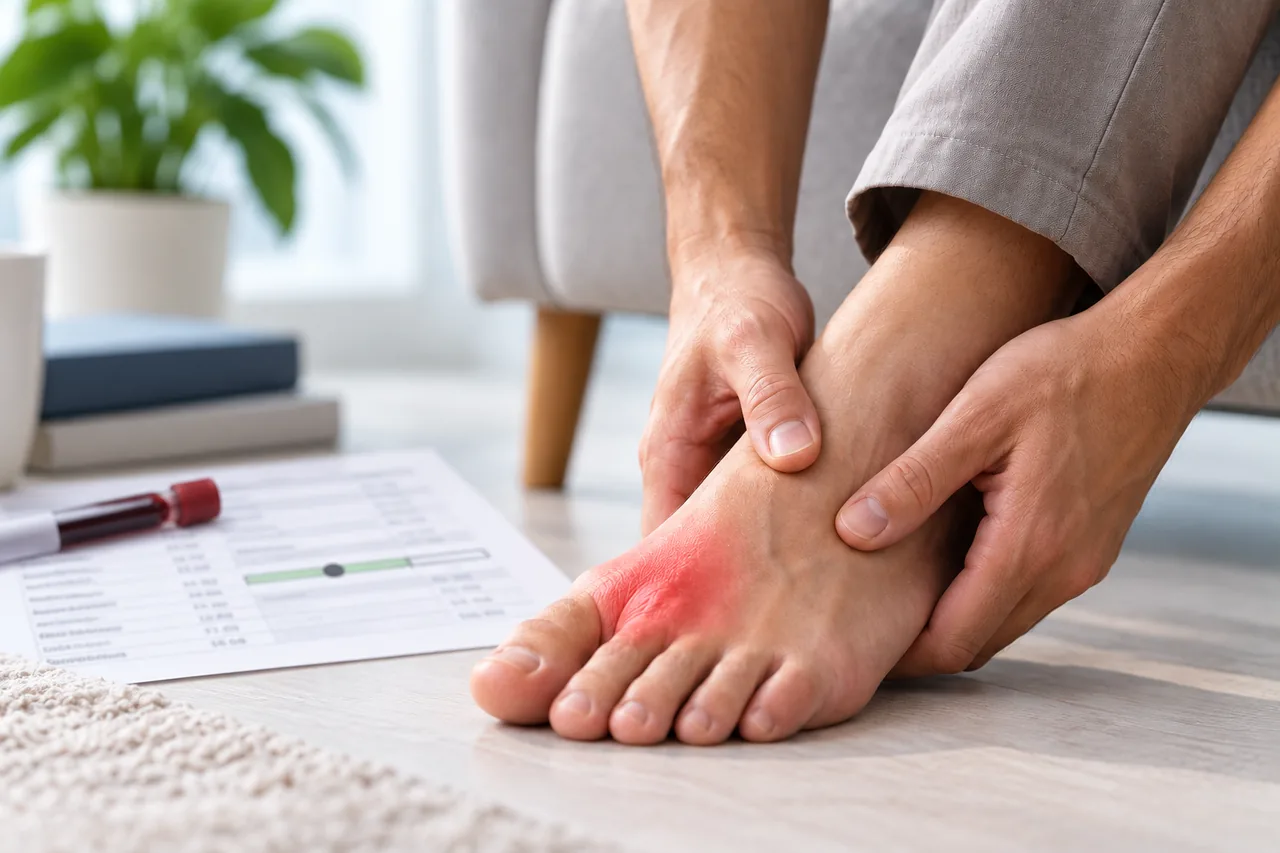
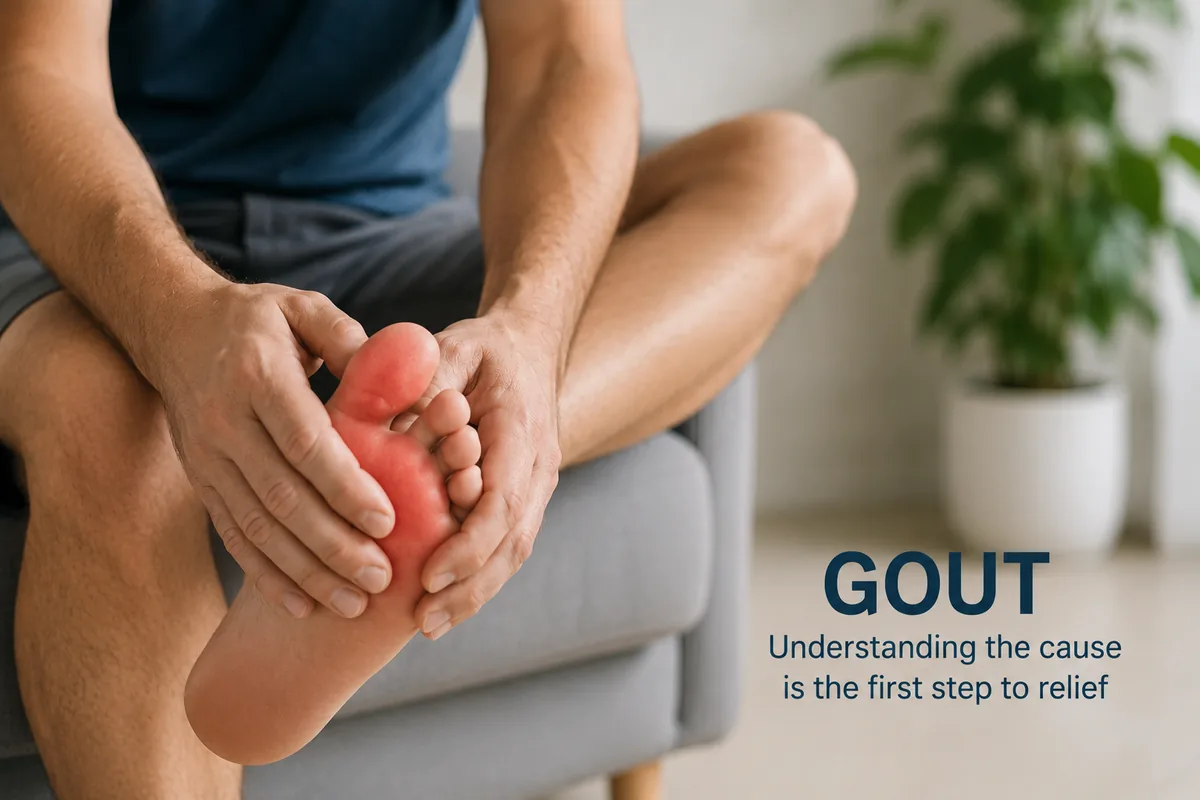
Gout is a form of inflammatory arthritis caused by uric acid crystals forming in and around the joints. An attack often starts suddenly — classically in the big toe — with pain, redness, swelling and extreme tenderness. After a few days it may disappear entirely, and that is exactly where the confusion begins.
A gout attack getting better does not necessarily mean the gout has gone away. Treating the attack and treating the underlying uric acid problem are two different things. The first controls inflammation now; the second, when clinically indicated, gradually reduces the crystal burden that causes attacks in the first place.
Key points
- Gout is inflammatory arthritis caused by uric acid crystals in and around the joints.
- Attacks can begin suddenly, often overnight, and the big toe is a classic site.1
- Typical features are pain, redness, swelling and extreme tenderness to touch.
- Symptoms can settle completely while crystals remain in the joint.
- Feeling well between attacks does not mean the gout has resolved.
- If uric acid stays high, attacks can recur and involve other joints.
- Diagnosis rests on the clinical history and examination, supported by blood tests and other investigations when appropriate. Notably, a uric acid level measured during an attack can be normal, so a single result should not be used to exclude gout; see can you have gout with a normal uric acid level?
- Acute treatment targets pain and inflammation; long-term urate-lowering treatment, when indicated, targets the uric acid itself.
- With appropriate treatment and follow-up, recurrent attacks and long-term joint damage can usually be reduced.
Why can gout come back after the pain disappears?
Because the inflammation of an individual attack can settle while uric acid crystals remain in and around the joint.
An acute attack is the body's inflammatory reaction to those crystals. Once that reaction subsides — with or without treatment — the joint can look and feel entirely normal. The crystals, however, do not disappear with the pain. If the uric acid level in the blood stays above the point at which crystals form, the deposits persist and can continue to build, so another attack becomes possible at any time, in the same joint or a different one.
Treating a gout attack vs. treating gout long term
These are two distinct goals, and doing one well does not achieve the other.
1. Controlling the acute attack
The aim during an attack is to settle pain and inflammation quickly and safely. The choice of approach depends on the person — their other medical conditions, kidney function and current medications — which is why acute treatment is individualised by a doctor rather than standardised.
2. Lowering uric acid over the long term
When it is clinically indicated, urate-lowering treatment reduces the uric acid level so that existing crystals gradually dissolve and new ones stop forming. This is a longer-term strategy, monitored with blood tests, and it is not automatically required by everyone who has had a single attack. The decision depends on factors such as how often attacks occur, how high the uric acid level is, whether there is joint damage or visible tophi, kidney stones, and kidney function.2
It is also worth knowing that starting urate-lowering treatment can itself trigger a flare in the early weeks — a well-recognised effect that is planned for, not a sign the treatment is failing.1 We explain this in detail in why gout medication can seem to make gout worse.
When to see a rheumatologist
It is reasonable to see a rheumatologist if attacks are recurring, if more than one joint is involved, if the diagnosis has never been confirmed, if uric acid stays high despite treatment, or if there are lumps (tophi) around joints. You can read more about our approach on the gout treatment page, or about the consultant on Dr. Bassel Darwish's profile.
Frequently Asked Questions
Can gout disappear without treatment?
An individual attack often settles on its own within days, but that is not the same as the gout resolving. Uric acid crystals can remain in the joint, and if the uric acid level stays high, further attacks are likely.
Why does gout often affect the big toe?
The big toe joint is cooler than more central joints and is subject to repeated pressure, and uric acid crystallises more readily at lower temperatures. This makes it a classic first site for gout.
Can gout occur in joints other than the big toe?
Yes. Gout can affect the midfoot, ankle, knee, wrist, fingers and elbow, and over time it can involve several joints rather than one.
Can gout crystals remain when I have no pain?
Yes. Crystals can persist in and around a joint that feels completely normal. Being pain-free between attacks does not confirm that the underlying problem has been treated.
What is the difference between treating a gout attack and lowering uric acid?
Treating an attack controls pain and inflammation at the time. Lowering uric acid is a longer-term treatment, used when clinically indicated, that gradually dissolves existing crystals and prevents new ones from forming.
When should someone with recurrent gout see a rheumatologist?
If attacks keep returning, involve more than one joint, are becoming more frequent or severe, if uric acid remains high on treatment, or if lumps appear around joints, a rheumatology assessment is appropriate.
This article and video are for general education and do not replace individual medical advice. Treatment decisions, including whether urate-lowering therapy is appropriate, should be made with your doctor.
Clinical references
Sources consulted while preparing this article. Links open the original guideline or publication.
- 1.Gout: diagnosis and management (NG219)National Institute for Health and Care Excellence (NICE) · 2022↑ back to text
- 2.2020 American College of Rheumatology Guideline for the Management of GoutArthritis Care & Research · 2020 · doi:10.1002/acr.24180↑ back to text
Find our health articles useful? Add Health Call Clinic as a Preferred Source on Google.
Have a question about this topic?
Our clinicians are happy to answer general educational questions related to this article.
We can't provide a diagnosis, recommend treatment, or comment on an individual medical case without a proper clinical assessment. If your question concerns your own symptoms, diagnosis, medications, test results, or treatment, please book an appointment so we can help you properly.
Please don't send medical records or sensitive personal health information through this educational Q&A.
Written by Dr Bassel Darwish
Consultant Rheumatologist
Credentials & training

ABIM Board Certified — Internal Medicine · Rheumatology

Fellow, American College of Rheumatology (FACR)

Rheumatology Fellowship, 1997–1999 — University of Wisconsin School of Medicine and Public Health
Talk to an expert at Health Call Clinic
In-clinic rheumatology, psychiatry and counseling, plus DHA-approved online psychiatry consultations at Dubai Healthcare City.