Rheumatology
Osteoporosis in Post-Menopausal Women: Why Screening Matters Before a Fracture Happens
One of the most challenging aspects of osteoporosis is that it usually causes no symptoms at all.
There is often no pain. No warning. No reason to think anything is wrong.
The first sign may be a broken wrist after what seemed like a minor fall. Or a hip fracture after slipping on a wet floor. Sometimes even lifting a heavy shopping bag or bending to tie a shoe can result in a vertebral fracture.
That is why osteoporosis is often called the silent disease: it may remain clinically silent until a fragility fracture occurs.1
For many women, particularly after menopause, bone loss develops gradually over many years without affecting everyday life — until a fracture suddenly changes everything.
The encouraging news is that osteoporosis is one of the few conditions where we can often identify increased risk before complications occur. That is exactly why screening matters.
A Patient's Story
Recently, I met a lady who had relocated to Dubai several years earlier.
She felt completely healthy. She walked regularly, remained active, and had never broken a bone. Her bone health assessment was arranged simply because she had reached the age where screening was recommended.
She smiled when I explained why we were arranging the test.
"But I don't have any pain."
Exactly. That is the challenge. Osteoporosis rarely causes pain until a fracture occurs.
Her bone density assessment revealed significant osteoporosis. She was genuinely surprised. Fortunately, because the diagnosis was made before a fracture occurred, treatment could begin early, greatly reducing her future risk.
Her story illustrates one of the most important lessons about osteoporosis: feeling well does not always mean your bones are as strong as they should be.
What Is Osteoporosis?
Bone is living tissue. Throughout life, old bone is constantly removed and replaced with new bone.
During childhood and early adulthood, new bone forms faster than old bone is lost. After menopause, that balance changes — bone loss gradually exceeds bone formation. Over time, bones become thinner, weaker, and more fragile.
Because the process is painless, many people remain completely unaware until the first fracture occurs. Early diagnosis allows treatment to begin before that happens.
Why Are Post-Menopausal Women at Higher Risk?
Estrogen plays an important role in maintaining bone strength. After menopause, estrogen levels naturally decline, accelerating bone loss, particularly during the first several years. This is a normal biological process experienced by women throughout the world.
Several additional factors may further increase the risk.
Factors you cannot change
- Increasing age
- Family history of osteoporosis
- Previous fragility fractures
- Early menopause
- Small body frame
Factors you may be able to improve
- Low calcium intake
- Vitamin D deficiency
- Smoking
- Excessive alcohol consumption
- Physical inactivity
Although Dubai enjoys abundant sunshine, vitamin D deficiency remains surprisingly common, largely because many people spend much of the day indoors or avoid direct sun exposure.
Osteoporosis and Autoimmune Diseases: An Often Overlooked Risk
As a rheumatologist, one of the important lessons I have learned is that osteoporosis is not only a disease of aging.
Several autoimmune diseases can independently increase the risk of bone loss, even before treatment is considered. Conditions such as rheumatoid arthritis, lupus, inflammatory myopathies, and some forms of vasculitis are associated with chronic inflammation, which gradually weakens bone over time.
In addition, many patients with autoimmune diseases require corticosteroids to control inflammation. These treatments are often essential — and sometimes life-saving — but prolonged use can further increase the risk of osteoporosis.
Reduced physical activity during disease flares, muscle weakness, chronic pain, and vitamin D deficiency may all contribute.
For these reasons, patients with autoimmune diseases often benefit from discussing bone health earlier than would normally be recommended based on age alone. Protecting bone health is an important part of treating the whole patient — not just the underlying autoimmune disease.
When Should You Consider Osteoporosis Screening?
The purpose of screening is simple: to identify weakened bones before they break.
DXA Scan: The Reference Standard
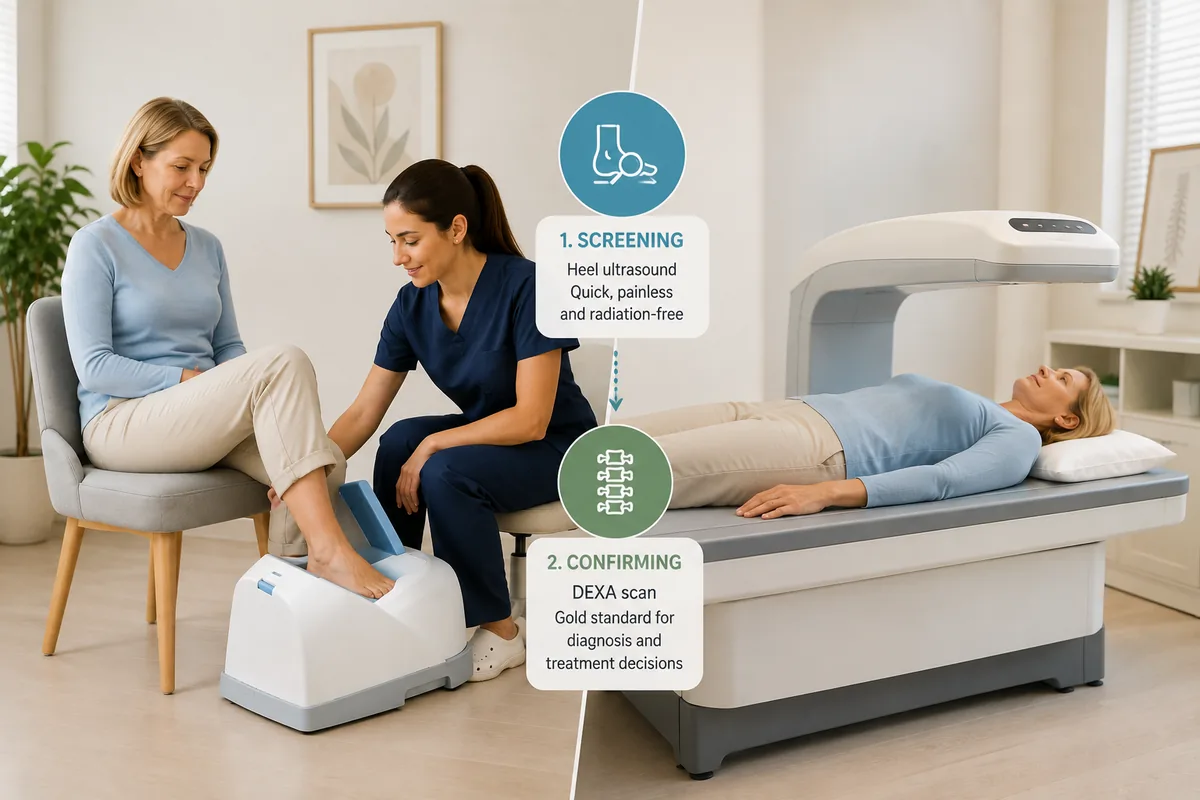
Central DXA (dual-energy X-ray absorptiometry) is used to measure bone mineral density and diagnose osteoporosis.1 The examination is:
- Quick
- Painless
- Uses very little radiation
- Requires no injections
- Requires no special preparation
The US Preventive Services Task Force recommends osteoporosis screening for women aged 65 years or older. It also recommends screening postmenopausal women younger than 65 when clinical risk assessment identifies increased fracture risk.2 That is USPSTF guidance, not a universal UAE screening mandate, and the decision should be individualized with your physician.
Age alone is not the only consideration for women under 65. Clinical risk factors may include previous fragility fracture, long-term corticosteroid exposure, low body weight, smoking, excess alcohol, early menopause, family history of osteoporosis, and medical conditions or medications associated with bone loss — including the autoimmune diseases discussed above.
If you fall into one of these groups and have never had your bone health assessed — or have not been screened since relocating to Dubai — it is worth discussing osteoporosis screening with your physician.
Heel Ultrasound Bone Screening: Making Assessment More Accessible
One of the greatest barriers to preventing osteoporosis is that many people never take the first step toward screening.
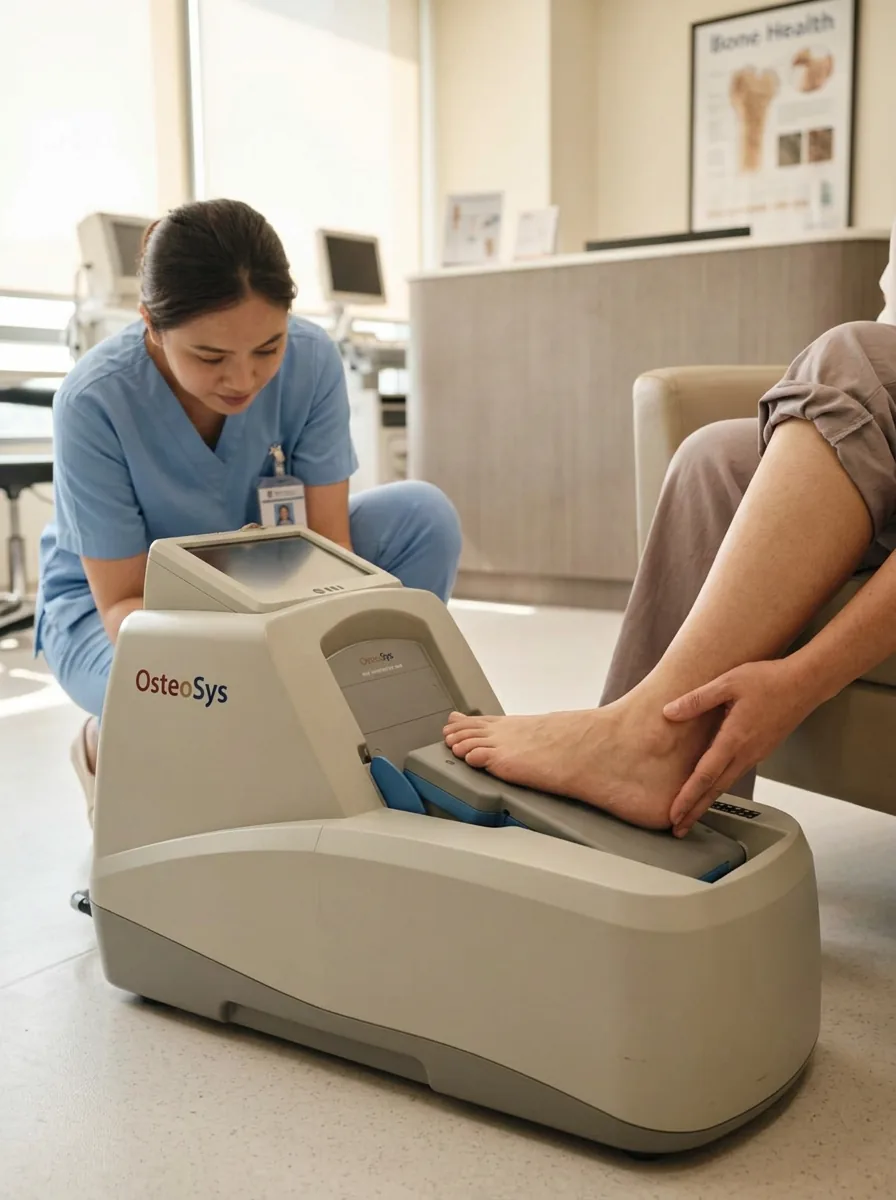
At Health Call Clinic, heel ultrasound bone screening is available as a convenient first assessment of bone health. The examination measures bone properties in the calcaneus (heel bone), an area rich in trabecular bone that is particularly useful for osteoporosis risk assessment.
The test:
- Takes only a few minutes
- Is completely painless
- Uses no radiation
- Requires no injections or special preparation
- Provides immediate results
- Can help identify individuals who may benefit from further evaluation
Central DXA is used to measure bone mineral density and diagnose osteoporosis. Heel ultrasound can provide information about bone status or fracture risk, but it is not used alone to diagnose osteoporosis; an abnormal screening result generally requires assessment with DXA.1
For many people who have never previously considered osteoporosis screening, heel ultrasound offers a simple, reassuring, and convenient first step. If the screening suggests an increased risk — or if important clinical risk factors are present — we may recommend a DXA scan.
Looking Beyond the Bone Density Number
Bone health is about much more than a scan result. Two people with exactly the same bone density may have very different risks of suffering a fracture.
Doctors also consider age, previous fractures, family history, smoking history, corticosteroid use, balance, muscle strength, other medical conditions, and risk of falls.
These factors are commonly combined using tools such as the FRAX® fracture risk calculator, helping estimate future fracture risk and guide individualized treatment decisions. Treatment should always be based on the whole person — not simply a number on a report.
What Happens If Your Bone Density Is Low?
A low bone density result does not automatically mean treatment is necessary. Results are usually classified as normal bone density, osteopenia, or osteoporosis.
Management depends on your overall fracture risk and may include:
- Weight-bearing exercise
- Adequate calcium intake
- Optimizing vitamin D levels
- Lifestyle modifications
- Periodic repeat bone density assessment
- Treatment when appropriate
The goal is not simply to improve a number on a scan. It is to reduce fracture risk and preserve independence, mobility, and quality of life.
Prevention Is Better Than Treatment
Although aging cannot be prevented, there is much we can do to support healthy bones. Regular exercise, maintaining adequate calcium intake, optimizing vitamin D levels, avoiding smoking, limiting excessive alcohol consumption, and remaining physically active all contribute to long-term bone health.
Healthy bones are built over a lifetime. It is never too early — or too late — to begin taking care of them.
A Final Thought
Most women never feel osteoporosis developing. That is precisely why screening matters.
A simple assessment performed at the right time can identify weakened bones years before the first fracture occurs. The goal is not simply to diagnose osteoporosis — it is to help people remain active, independent, and confident for many years to come.
Sometimes the most valuable medical test is not the one that discovers disease. It is the one that helps prevent its consequences.
Frequently Asked Questions
What is osteoporosis?
Osteoporosis is a condition in which bones gradually become weaker and more fragile, increasing the risk of fractures. It often remains clinically silent until a bone breaks.1
What is a DEXA scan?
Central DXA (dual-energy X-ray absorptiometry) is used to measure bone mineral density and diagnose osteoporosis. It is quick, painless, and uses a very low dose of radiation.1
Should I have a heel ultrasound or a DEXA scan?
They serve different purposes. Heel ultrasound can provide information about bone status or fracture risk, but it is not used alone to diagnose osteoporosis; an abnormal screening result generally requires assessment with DXA, which is used to measure bone mineral density and make the diagnosis.1
Who should be screened for osteoporosis?
The US Preventive Services Task Force recommends osteoporosis screening for women aged 65 years or older. It also recommends screening postmenopausal women younger than 65 when clinical risk assessment identifies increased fracture risk.2 This is USPSTF guidance rather than a universal UAE screening mandate, so the decision should be individualized with your physician.
Can osteoporosis cause pain?
Usually not. Osteoporosis may remain clinically silent until a fragility fracture occurs.1
What is osteopenia?
Osteopenia means bone density is lower than normal but has not yet reached the threshold for osteoporosis.
Does rheumatoid arthritis increase the risk of osteoporosis?
Yes. Chronic inflammation itself can contribute to bone loss, and the risk may increase further in people who require long-term corticosteroid treatment. Maintaining good disease control and monitoring bone health are important parts of comprehensive rheumatology care.
Can osteoporosis be prevented?
Although aging cannot be prevented, regular exercise, adequate calcium and vitamin D intake, avoiding smoking, limiting alcohol, and maintaining a healthy lifestyle all help support bone health.
If I feel well, do I still need screening?
Possibly. Osteoporosis may remain clinically silent until a fragility fracture occurs, which is why appropriate screening can be so valuable.1
This article is intended for educational purposes only and does not replace individualized medical advice. If you have concerns about osteoporosis or your fracture risk, consult a qualified physician who can assess your individual circumstances.
Book a Consultation
To discuss bone health or arrange screening with our rheumatology team, call +971 4 363 5343 or WhatsApp +971 52 197 1179. You can also book an appointment online.
Clinical references
Sources consulted while preparing this article. Links open the original guideline or publication.
- 1.OsteoporosisU.S. Food and Drug Administration · 2024↑ back to text
- 2.Osteoporosis to Prevent Fractures: ScreeningU.S. Preventive Services Task Force · 2025↑ back to text
Find our health articles useful? Add Health Call Clinic as a Preferred Source on Google.
Have a question about this topic?
Our clinicians are happy to answer general educational questions related to this article.
We can't provide a diagnosis, recommend treatment, or comment on an individual medical case without a proper clinical assessment. If your question concerns your own symptoms, diagnosis, medications, test results, or treatment, please book an appointment so we can help you properly.
Please don't send medical records or sensitive personal health information through this educational Q&A.
Talk to an expert at Health Call Clinic
In-clinic rheumatology, psychiatry and counseling, plus DHA-approved online psychiatry consultations at Dubai Healthcare City.