Rheumatology
Could Vitamin D Deficiency Be Contributing to Your Joint Pain?

The short answer to the question in the title is: usually not on its own. Low vitamin D is often raised as an explanation for aching joints, and it deserves a more careful look than that.
UAE studies have reported a high prevalence of low vitamin D levels in some sampled populations, despite abundant sunlight. Estimates vary with the population studied and the threshold used.1 Findings from a single community sample cannot be assumed to describe the whole UAE population.
Factors associated with lower vitamin D levels
- Limited time outdoors and indoor lifestyles
- Limited skin exposure to sunlight
- Tinted glass reducing UV transmission
- Low dietary vitamin D intake
- More deeply pigmented skin, which produces vitamin D more slowly for a given amount of sunlight
Why vitamin D matters
Vitamin D supports the absorption of calcium and phosphate and is needed for normal bone mineralisation.2
What clinically significant deficiency can cause
Severe vitamin D deficiency can cause rickets in children and osteomalacia in adolescents and adults, which may produce bone pain and muscle weakness.2
That is a different situation from mildly low readings on a blood test. Fatigue and nonspecific aches are common in the general population and are not diagnostic of vitamin D deficiency.
Vitamin D and joint symptoms
Bone pain and muscle weakness can occur with clinically significant deficiency, but nonspecific joint pain has many other causes. Associations between vitamin D levels and rheumatic-disease symptoms do not by themselves establish causation.2,3
Vitamin D deficiency does not cause inflammatory arthritis, and correcting it is not a treatment for an underlying rheumatic disease.
Vitamin D and bone health
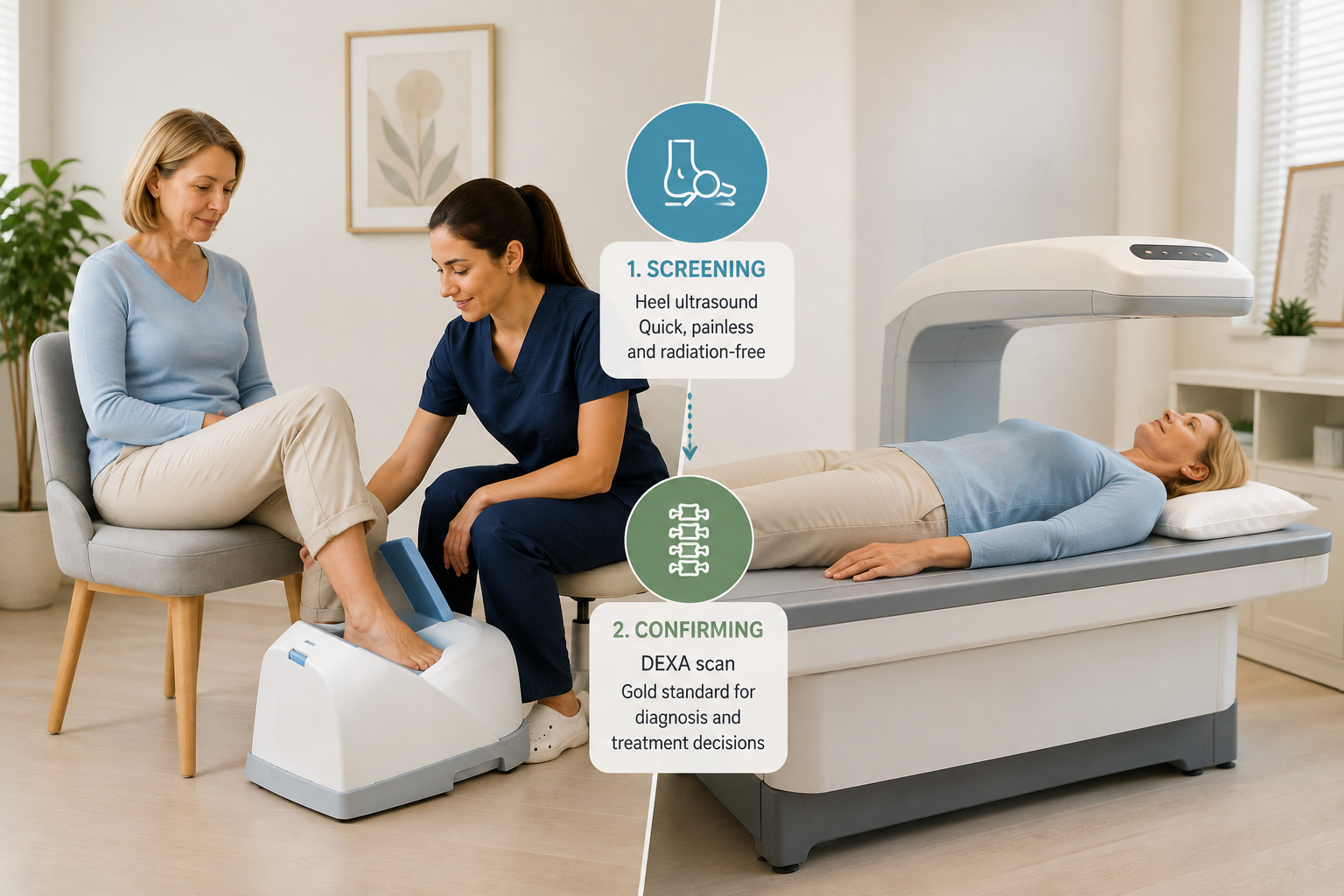
Severe, long-standing deficiency causes defective bone mineralisation — rickets or osteomalacia. Vitamin D status is one of several factors relevant to bone health and is considered alongside osteoporosis assessment, but low vitamin D is not the same thing as osteoporosis, which is diagnosed and managed on its own criteria.
Testing
When testing is clinically indicated, the blood measurement used is 25-hydroxyvitamin D.
Current Endocrine Society guidance recommends against routine vitamin D testing in otherwise healthy people without an established indication.3 Persistent joint pain, in itself, is not a reason to test everyone — it is a reason for a proper musculoskeletal assessment.
Treatment
Management is individualized and depends on the degree of deficiency and its cause. It may involve dietary intake, supplementation at a dose appropriate to the situation, attention to calcium intake, and repeat testing where that will change decisions.
Sunlight exposure contributes to vitamin D status, but recommendations need to take skin-health and skin-cancer risk into account, so dietary intake and supplementation are usually the more predictable route.
Excessive vitamin D supplementation can be harmful, including through raised calcium levels. High-dose treatment should be professionally supervised.2
Can vitamin D deficiency explain all joint pain?
No. Persistent joint pain has many possible causes and should be assessed properly if symptoms continue.
When should you see a rheumatologist?
Seek specialist assessment if pain persists, joints are swollen or stiff, or there is a family history of autoimmune disease or osteoporosis.
A final thought
Vitamin D deficiency is worth identifying when it is clinically significant. But persistent joint pain should not be attributed to a low vitamin D level by default. The right diagnosis begins with the whole picture — not a single blood test.
Frequently Asked Questions
Can vitamin D deficiency cause joint pain?
Clinically significant deficiency can cause bone pain and muscle weakness. Ordinary joint pain has many other causes, and an association between low vitamin D and symptoms does not establish that one caused the other.2,3
Can vitamin D deficiency cause fatigue?
Fatigue is a very common symptom with many causes. It is not a reliable indicator of vitamin D deficiency on its own.
How is vitamin D deficiency diagnosed?
With a blood test measuring 25-hydroxyvitamin D, when testing is clinically indicated.
Should everyone be tested?
No. Endocrine Society guidance recommends against routine testing in otherwise healthy people without an established indication.3
How long does treatment take?
Response and follow-up depend on the degree of deficiency, treatment used, underlying cause, adherence and individual clinical circumstances.
Can I take vitamin D without testing?
Standard supplement doses are widely used, but higher doses should be guided and supervised by a healthcare professional, as excessive intake can be harmful.2
Can vitamin D deficiency cause osteoporosis?
Vitamin D status is one factor in bone health, and severe deficiency causes osteomalacia. Osteoporosis is a distinct diagnosis with its own assessment and management.
Who is most likely to have low levels?
People with little sun exposure, more deeply pigmented skin, older age, limited dietary intake, or conditions affecting absorption.
Clinical references
Sources consulted while preparing this article. Links open the original guideline or publication.
- 1.Vitamin D Deficiency and Its Determinants in Adults: A Sample from Community-Based Settings in the United Arab EmiratesInternational Journal of Endocrinology · 2017 · doi:10.1155/2017/3906306↑ back to text
- 2.Vitamin D: Fact Sheet for ConsumersNational Institutes of Health Office of Dietary Supplements↑ back to text
- 3.Vitamin D for the Prevention of Disease: An Endocrine Society Clinical Practice GuidelineThe Journal of Clinical Endocrinology & Metabolism · 2024 · doi:10.1210/clinem/dgae290↑ back to text
Find our health articles useful? Add Health Call Clinic as a Preferred Source on Google.
Have a question about this topic?
Our clinicians are happy to answer general educational questions related to this article.
We can't provide a diagnosis, recommend treatment, or comment on an individual medical case without a proper clinical assessment. If your question concerns your own symptoms, diagnosis, medications, test results, or treatment, please book an appointment so we can help you properly.
Please don't send medical records or sensitive personal health information through this educational Q&A.
Talk to an expert at Health Call Clinic
In-clinic rheumatology, psychiatry and counseling, plus DHA-approved online psychiatry consultations at Dubai Healthcare City.